
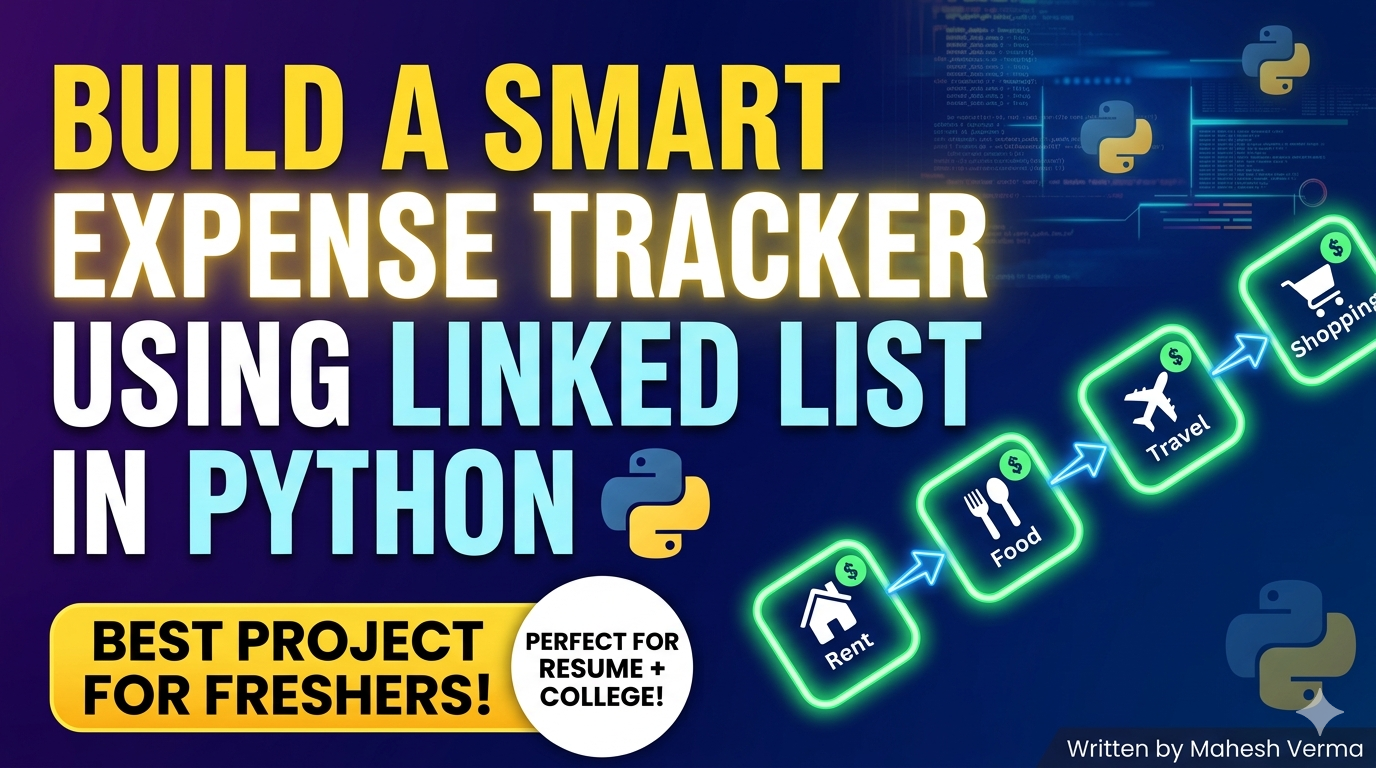
Stop Learning Linked List, Start Building a Real Project
Have you ever completed multiple videos on Linked List—like insertion, deletion, traversal, searching, reversing—and still wondered:
“Where do we actually use this in real life?”
You’re not alone.
Most students learn Data Structures just for exams or interviews, but struggle to apply them in real-world projects.
That’s exactly why I created this project.
Today, we are not just revising Linked List…
We are building a complete Smart Expense Tracker using Linked List in Python.
This is not a random mini program.
This is a DSA-based real-world application that shows how Linked List works behind actual software logic.
Why This Linked List Project Matters
This project is a game-changer if you are:
For BCA / BTech / MCA Students
- Perfect DSA Project for college submission
- Can be used as Mini Project or Major Project
- Covers viva topics like:
- Linked List implementation
- Data traversal
- Searching & deletion logic
- Real-world application of DSA
For Job Seekers
- Shows you can apply DSA in real scenarios
- Not just theory — actual implementation
- Great for resume + GitHub portfolio
For Beginners
- Helps you move from learning → building
- Understand how data structures are used in real apps
The One-Shot DSA Project (Linked List in Python)
This entire project is built in a single session, where we combine all Linked List concepts into one application.
You will learn how to go from: Concept → Logic → Real Application
using only Python + Linked List (No shortcuts like arrays)
Key Features of Smart Expense Tracker
This is not a basic project. It includes multiple real-world features:
Linked List Implementation (Core DSA)
- Custom Node structure (category, amount, date)
- Dynamic memory-like structure using Linked List
- No use of arrays for storage
This is pure Data Structures implementation
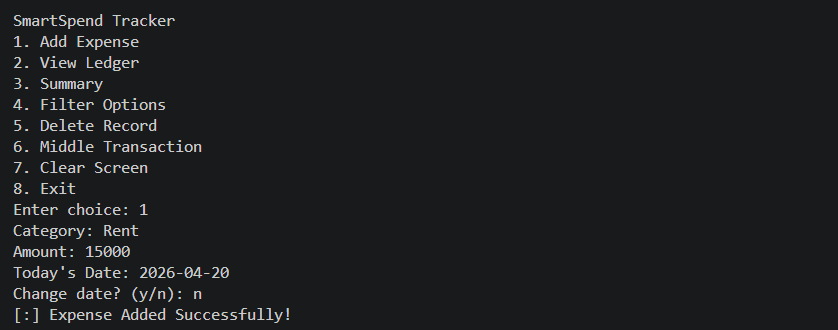
Sorted Insertion (Advanced Concept)
- Expenses are inserted based on date order
- Automatically maintains sorted structure
Shows how Linked List can be used in real-time data organization
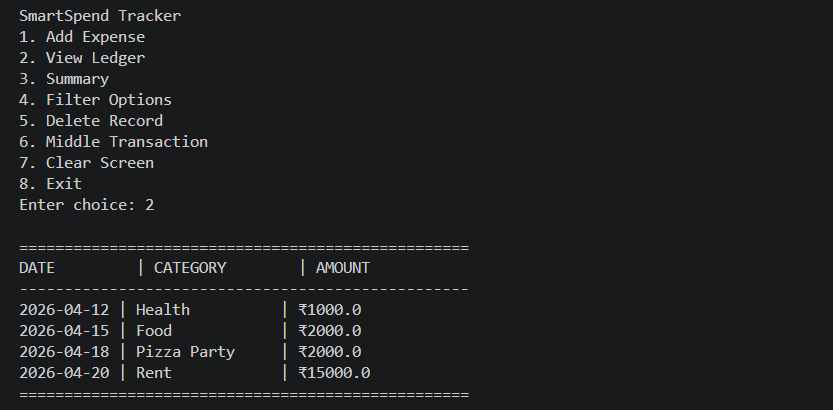
CRUD Operations (Real Development)
- Add Expense
- View Ledger
- Delete Records (smart selection)
This connects DSA with real software development
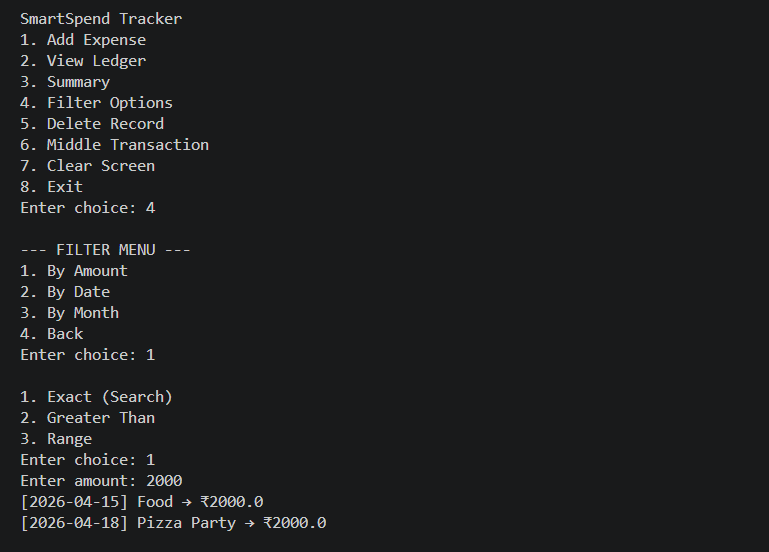
Smart Filtering System
- Filter by amount
- Filter by date
- Filter by month
Uses conditions + logic building (lambda-based thinking)
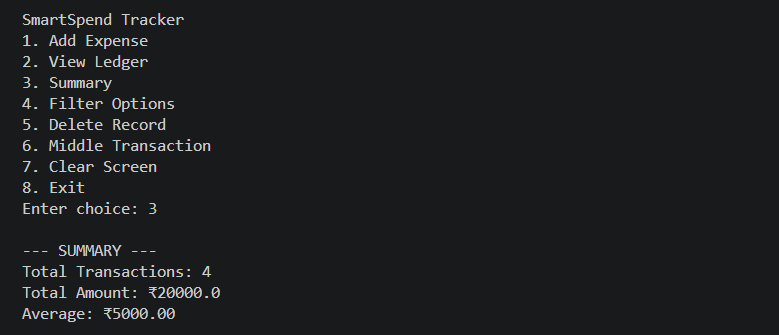
Summary & Insights
- Total expenses
- Average spending
- Number of transactions
Data becomes meaningful, not just stored
Middle Element (Fast & Slow Pointer)
- Find middle transaction using 2-pointer approach
Same concept used in:
- LeetCode problems
- Interview questions
What You Will Actually Learn
This project goes beyond theory:
- How to implement Linked List from scratch
- How to connect DSA with real-world use cases
- How to structure a complete Python application
- How to handle user input and logic flow
- How to think like a developer, not just a student
⚠️ Common Mistakes Students Make
While building Linked List projects, students usually struggle with:
- Pointer handling (next reference confusion)
- Deletion logic (losing node links)
- Traversal mistakes
- Applying DSA in real-world scenarios
In this project, all these are solved step-by-step.
Bonus Ideas to Upgrade This Project
Want to make this project even stronger for your resume?
Try adding:
- Update functionality (full CRUD)
- File storage (CSV / Database)
- GUI (Tkinter / Web)
- User login system
- Charts & analytics
Watch Full Implementation
In this video, I explain the entire project step-by-step, combining all Linked List concepts into one real application.
Download Source Code (GitHub)
Get full source code here: CLICK ME
Final Thought
If you really want to master DSA:
Don’t just solve questions.
Don’t just memorize code.
👉 Build projects using Data Structures.
That’s where real understanding begins.
Frequently Asked Questions (FAQ)
1. Is this project good for BCA or BTech students?
Yes, this is a perfect DSA project for BCA, BTech, and MCA students. You can submit it as a mini project or extend it into a major project.
2. Can I add this to my resume?
Absolutely. This project shows:
- DSA knowledge
- Problem-solving
- Real-world implementation
3. Is this beginner-friendly?
Yes. If you understand basic Linked List concepts, you can build this project easily.
4. Can I improve this project further?
Yes — add database, UI, or analytics to make it even more powerful.